Cryptocurrency bitcoin price
Just two months later, on January 3, 2009, Nakamoto mined the first block on the Bitcoin network, known as the genesis block, thus launching the world’s first cryptocurrency https://paradisewinellc.com/videopoker/. Bitcoin price was $0 when first introduced, and most Bitcoins were obtained via mining, which only required moderately powerful devices (e.g. PCs) and mining software. The first known Bitcoin commercial transaction occurred on May 22, 2010, when programmer Laszlo Hanyecz traded 10,000 Bitcoins for two pizzas. At Bitcoin price today in mid-September 2021, those pizzas would be worth an astonishing $478 million. This event is now known as “Bitcoin Pizza Day.” In July 2010, Bitcoin first started trading, with the Bitcoin price ranging from $0.0008 to $0.08 at that time.
The top crypto is considered a store of value, like gold, for many — rather than a currency. This idea of the first cryptocurrency as a store of value, instead of a payment method, means that many people buy the crypto and hold onto it long-term (or HODL) rather than spending it on items like you would typically spend a dollar — treating it as digital gold.
The domain name bitcoin.org was registered on 18 August 2008. On 31 October 2008, a link to a white paper authored by Satoshi Nakamoto titled Bitcoin: A Peer-to-Peer Electronic Cash System was posted to a cryptography mailing list. Nakamoto implemented the bitcoin software as open-source code and released it in January 2009. Nakamoto’s identity remains unknown. According to computer scientist Arvind Narayanan, all individual components of bitcoin originated in earlier academic literature. Nakamoto’s innovation was their complex interplay resulting in the first decentralized, Sybil resistant, Byzantine fault tolerant digital cash system, that would eventually be referred to as the first blockchain. Nakamoto’s paper was not peer reviewed and was initially ignored by academics, who argued that it could not work.
Cryptocurrency regulation
As the global cryptocurrency market continues to grow and evolve, it is essential for countries to learn from one another and collaborate on developing effective regulatory frameworks that balance innovation and consumer protection. By understanding the various approaches to cryptocurrency regulation around the world, individuals and businesses can better navigate the complex and ever-changing landscape of digital assets.
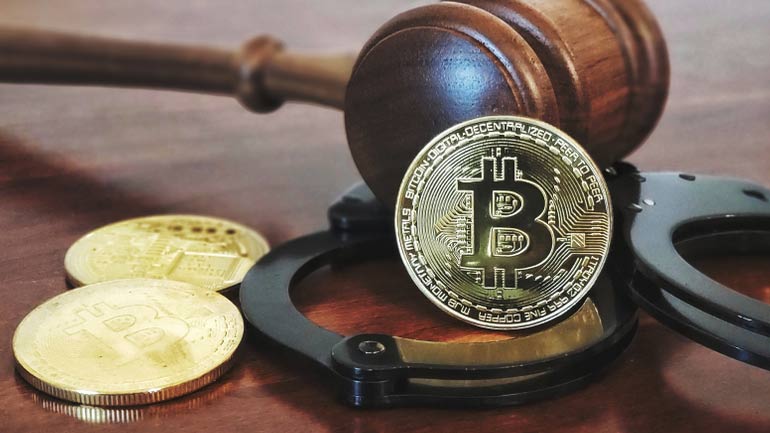
As the global cryptocurrency market continues to grow and evolve, it is essential for countries to learn from one another and collaborate on developing effective regulatory frameworks that balance innovation and consumer protection. By understanding the various approaches to cryptocurrency regulation around the world, individuals and businesses can better navigate the complex and ever-changing landscape of digital assets.
CO Rev Stat § 24-37.5-105 states that “in the administration of any new major information technology project, the ffice …shall evaluate the potential use of blockchain and distributed ledger technologies as part of the project.” It further states that “The office shall conduct an assessment and bring recommendations for distributed ledger or blockchain implementations to the joint technology committee of the general assembly.”
Delaware allows corporations to maintain their records on a blockchain or blockchain-like technology. 8 DE Code § 224 states that “Any records administered by or on behalf of the corporation in the regular course of its business, including its stock ledger, books of account, and minute books, may be kept on, or by means of, or be in the form of, any information storage device, method, or 1 or more electronic networks or databases (including 1 or more distributed electronic networks or databases).” 8 DE Code § 219 and 8 DE Code § 232 provide rules for the transmission of shareholder notifications when corporate records are stored on an electronic network or a blockchain. SB 194, signed in 2018, amends Delaware’s code to allow blockchain technology to be used by statutory trusts. 12 DE Code § 3801 states that beneficial interest in a statutory trust may be evidenced electronically by “1 or more electronic networks or databases (including 1 or more distributed electronic networks or databases).” 12 DE Code § 3806 states that beneficial owners and trustees may “may vote…by means of electronic transmission” including by use of distributed electronic networks or databases. 12 DE Code § 3819 states that “A statutory trust may maintain its records …by means of…1 or more electronic networks or databases (including 1 or more distributed electronic networks or databases), if such form is capable of conversion into paper form within a reasonable time.” SB 183, which was also signed in 2018, makes similar provisions for LLCs and limited partnerships. SB 89, SB 90, and SB 91 were enacted in 2019, and collectively amend the Delaware Revised Uniform Partnership Act and Delaware Limited Liability Company Act, among other statutes, to allow the use of blockchain technology to maintain certain records and facilitate certain electronic transmissions.
Since June 30, 2020, businesses must get permission from Hawaii’s Digital Currency Innovation Lab to engage in cryptocurrency transactions under a “two-year program to evaluate whether the digital currency industry should be licensed or not.” After this date, legislation is needed “to enable reasonable licensing of this industry or exempt it from licensing.” The pilot project was recently extended another two years to end on June 30, 2022 (HR 115). This came after numerous other bills that attempted to set up a licensing process failed to pass.
Arizona’s legislature is currently considering several bills relating to cryptocurrencies. HB 2204 (passed by the House on February 23, 2022) clarifies the state taxation of digital assets. SB 1127 would allow state agencies to accept cryptocurrency as a payment for fines, penalties, rent, rates, taxes, fees, charges, revenue, financial obligations, and special assessments from cryptocurrency issuers. SB 1128 and SCR 1014 exempt virtual currency from property tax. SB 1341 defines Bitcoin as legal tender. SB 1383 (sent to the governor on June 8, 2022) includes cryptocurrency in the definition of liquid assets for divorce matters. SB 1493 would allow state agencies to pay their employees in virtual currency if requested by the employees. SCR 1013 defines digital currency as a medium exchange and asserts the right to own digital currency.
Cryptocurrency prices
Almost. We have a process that we use to verify assets. Once verified, we create a coin description page like this. The world of crypto now contains many coins and tokens that we feel unable to verify. In those situations, our Dexscan product lists them automatically by taking on-chain data for newly created smart contracts. We do not cover every chain, but at the time of writing we track the top 70 crypto chains, which means that we list more than 97% of all tokens.
Here at CoinMarketCap, we work very hard to ensure that all the relevant and up-to-date information about cryptocurrencies, coins and tokens can be located in one easily discoverable place. From the very first day, the goal was for the site to be the number one location online for crypto market data, and we work hard to empower our users with our unbiased and accurate information.
In order to send and receive a cryptocurrency, you need a cryptocurrency wallet. A cryptocurrency wallet is software that manages private and public keys. In the case of Bitcoin, as long as you control the private key necessary to transact with your BTC, you can send your BTC to anyone in the world for any reason.
Cryptocurrency works through networks of nodes that are constantly communicating with each other to stay updated about the current state of the ledger. With permissionless cryptocurrencies, a node can be operated by anyone, provided they have the necessary technical knowledge, computer hardware and bandwidth.
What is cryptocurrency
The legal status of cryptocurrencies creates implications for their use in daily transactions and trading. In June 2019, the Financial Action Task Force (FATF) recommended that wire transfers of cryptocurrencies should be subject to the requirements of its Travel Rule, which requires AML compliance.
There are also purely technical elements to consider. For example, technological advancement in cryptocurrencies such as bitcoin result in high up-front costs to miners in the form of specialized hardware and software. Cryptocurrency transactions are normally irreversible after a number of blocks confirm the transaction. Additionally, cryptocurrency private keys can be permanently lost from local storage due to malware, data loss or the destruction of the physical media. This precludes the cryptocurrency from being spent, resulting in its effective removal from the markets.
A cryptocurrency wallet is a means of storing the public and private “keys” (address) or seed, which can be used to receive or spend the cryptocurrency. With the private key, it is possible to write in the public ledger, effectively spending the associated cryptocurrency. With the public key, it is possible for others to send currency to the wallet.
In the longer term, of the 10 leading cryptocurrencies identified by the total value of coins in circulation in January 2018, only four (bitcoin, Ethereum, Cardano and Ripple (XRP)) were still in that position in early 2022. The total value of all cryptocurrencies was $2 trillion at the end of 2021, but had halved nine months later. The Wall Street Journal has commented that the crypto sector has become “intertwined” with the rest of the capital markets and “sensitive to the same forces that drive tech stocks and other risk assets,” such as inflation forecasts.
On 10 June 2021, the Basel Committee on Banking Supervision proposed that banks that held cryptocurrency assets must set aside capital to cover all potential losses. For instance, if a bank were to hold bitcoin worth $2 billion, it would be required to set aside enough capital to cover the entire $2 billion. This is a more extreme standard than banks are usually held to when it comes to other assets. However, this is a proposal and not a regulation.