Bitcoin cryptocurrency
The total crypto market volume over the last 24 hours is $148.18B, which makes a 22.57% decrease. The total volume in DeFi is currently $8.34B, 5.63% of the total crypto market 24-hour volume https://pegahfar.com/. The volume of all stable coins is now $135.8B, which is 91.64% of the total crypto market 24-hour volume.
It has managed to create a global community and give birth to an entirely new industry of millions of enthusiasts who create, invest in, trade and use Bitcoin and other cryptocurrencies in their everyday lives. The emergence of the first cryptocurrency has created a conceptual and technological basis that subsequently inspired the development of thousands of competing projects.
Rewards will be provided to users who inform us of the above. Reward amounts will be determined based on the type and relevance of the information provided. Your personal information will be kept confidential.
Over the past few decades, consumers have become more curious about their energy consumption and personal effects on climate change. When news stories started swirling regarding the possible negative effects of Bitcoin’s energy consumption, many became concerned about Bitcoin and criticized this energy usage. A report found that each Bitcoin transaction takes 1,173 KW hours of electricity, which can “power the typical American home for six weeks.” Another report calculates that the energy required by Bitcoin annually is more than the annual hourly energy usage of Finland, a country with a population of 5.5 million.
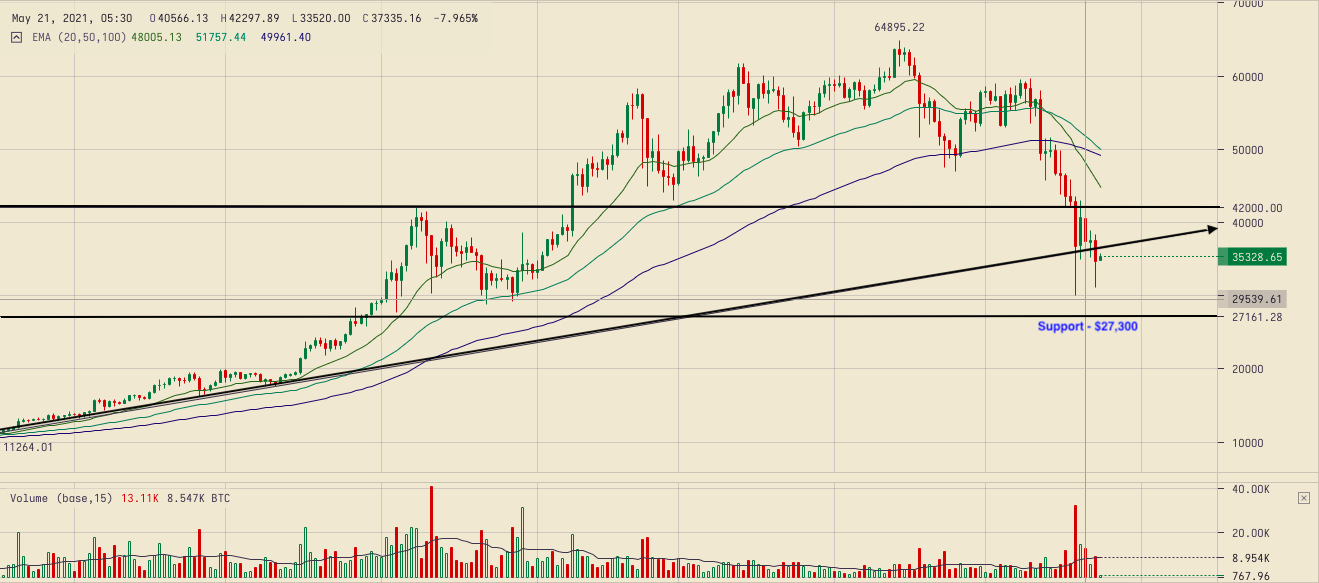
Cryptocurrency prices
We rank cryptocurrencies based on the market cap by default. However, we do offer filters according to other metrics such as trading volume or price. Besides market cap, we also implemented certain criteria to decide which ‘tier’ a coin would be placed at. Learn more about how we rank coins.
NFTs are multi-use images that are stored on a blockchain. They can be used as art, a way to share QR codes, ticketing and many more things. The first breakout use was for art, with projects like CryptoPunks and Bored Ape Yacht Club gaining large followings. We also list all of the top NFT collections available, including the related NFT coins and tokens.. We collect latest sale and transaction data, plus upcoming NFT collection launches onchain. NFTs are a new and innovative part of the crypto ecosystem that have the potential to change and update many business models for the Web 3 world.
As already mentioned, there are plans to transition to a proof-of-stake algorithm in order to boost the platform’s scalability and add a number of new features. The development team has already begun the transition process to ETH 2.0, implementing some upgrades along the way, including the London hard fork.
We rank cryptocurrencies based on the market cap by default. However, we do offer filters according to other metrics such as trading volume or price. Besides market cap, we also implemented certain criteria to decide which ‘tier’ a coin would be placed at. Learn more about how we rank coins.
NFTs are multi-use images that are stored on a blockchain. They can be used as art, a way to share QR codes, ticketing and many more things. The first breakout use was for art, with projects like CryptoPunks and Bored Ape Yacht Club gaining large followings. We also list all of the top NFT collections available, including the related NFT coins and tokens.. We collect latest sale and transaction data, plus upcoming NFT collection launches onchain. NFTs are a new and innovative part of the crypto ecosystem that have the potential to change and update many business models for the Web 3 world.
Cryptocurrency regulation
WV Code § 32A-2-1 broadly defines both currency transmission and money transmission as “engaging in the business of…receiving currency, the payment of money, or other value that substitutes for money by any means for the purpose of transmitting,” which seems to include cryptocurrency. WV Code § 32A-2-2 states that “a person may not engage in the business of currency exchange, transportation or transmission in this state without a license.” WV Code § 31A-8G-1 creates the West Virginia Fintech Regulatory Sandbox Program. According to WV Code § 31A-8G-4, a licensee of this Sandbox “is not subject to state laws that regulate financial products or services.” WV Code § 61-15-1 explicitly includes cryptocurrency under the definition of monetary instruments which are banned from being used to launder value. On March 26, 2022, Governor Jim Justice signed HB 4511, which amends the Unclaimed Property Act to include provisions for the treatment of virtual currency.
However, overall, the regulatory landscape in Canada is often viewed as stricter than their American cousins. FTX and Binance, for example, both pulled out of the Canadian province of Ontario entirely in 2021 due to onerous regulatory demands.
The Nebraska Financial Innovation Act (NE Code § 8-3001 to 3031) lays out a series of guidelines for how digital asset depositories are chartered, operated, supervised, and regulated in Nebraska. The express intent of the Act is to “provide a necessary and valuable service to blockchain innovators and customers, emphasize Nebraska’s partnership with the technology and financial industry, safely grow this state’s ever-evolving financial sector, and afford more opportunities for Nebraska residents.” NE Code § 8-3003 defines a digital asset depository as “a financial institution that securely holds liquid assets…in the form of controllable electronic records.” The same section defines blockchain, controllable electronic record, decentralized finance, fork, and stablecoin. NE Code § 8-3015 states that “No corporation shall act as a digital asset depository without first obtaining authority or a charter to operate” from the Director of Banking and Finance. Existing financial institutions need authorization to open a digital asset depository department while strictly digital asset depository institutions need a new charter. NE Code § 8-3005 permits digital asset depositories to “Carry on a nonlending digital asset banking business” and “Provide payment services.” The same section states that digital asset depositories “shall not accept demand deposits of United States currency” or “make any consumer loans.” NE Code § 8-3024 allows digital asset depositories to “Provide digital asset and cryptocurrency custody services…Issue stablecoins and…Use independent node verification networks and stablecoins for payment activities.” LB 707, signed into law on April 18, amends this section to restrict digital asset and cryptocurrency custody services to cryptocurrency that was either “Initially offered for public trade more than six months prior to the date of the custody services” or “Created or issued by any bank, savings bank, savings and loan association, or building and loan association” authorized to do business in Nebraska. NE Code § 8-3008 requires digital asset depositories to give customers “full and complete” disclosure of account terms and conditions with “no material misrepresentations” and “in readily understandable language.” NE Code § 8-3009 requires that digital asset depositories “maintain unencumbered liquid assets denominated in United States dollars valued at not less than one hundred percent of the digital assets in custody.” The Act overall allows Nebraska banks to offer cryptocurrency services that are not available in the vast majority of other states.
D.C. has no cryptocurrency-specific statutes, but case law from United States v. Harmon (2021) establishes that cryptocurrency businesses fall under the Money Transmission Act and must register as money transmitters.