Cryptocurrency news
Because it is impossible to set up a central authority or bank to manage blockchains, crypto transactions are validated by nodes (computers connected to a blockchain). So the question is: How do these networks ensure that node operators are willing to partake in the validation process stinkin rich slot machine bonus?
There is stiff competition for these rewards, so many users try to submit blocks, but only one can be selected for each new block of transactions. To decide who gets the reward, Bitcoin requires users to solve a difficult puzzle, which uses a huge amount of energy and computing power. The completion of this puzzle is the “work” in proof of work.
Proof of stake systems have some similarities to proof of work protocols, in that they rely on users to collect and submit new transactions. But they have a different way of incentivizing honest behavior among those who participate in that process. Essentially, people who propose new blocks of information to be added to the record must put some cryptocurrency at stake. In many cases, your chances of landing a new block (and the associated rewards) go up as you put more at stake. People who submit inaccurate data can lose some of the money they’ve put at risk.
Cryptocurrency news
NewsNow aims to be the world’s most accurate and comprehensive crypto news aggregator, bringing you today’s latest headlines from the best alt coins and crypto news sites. Whether it’s Bitcoin, Dogecoin, Diem, Ethereum or Ripple, Monero, Litecoin, Dash or NEM, we’ve got it covered.
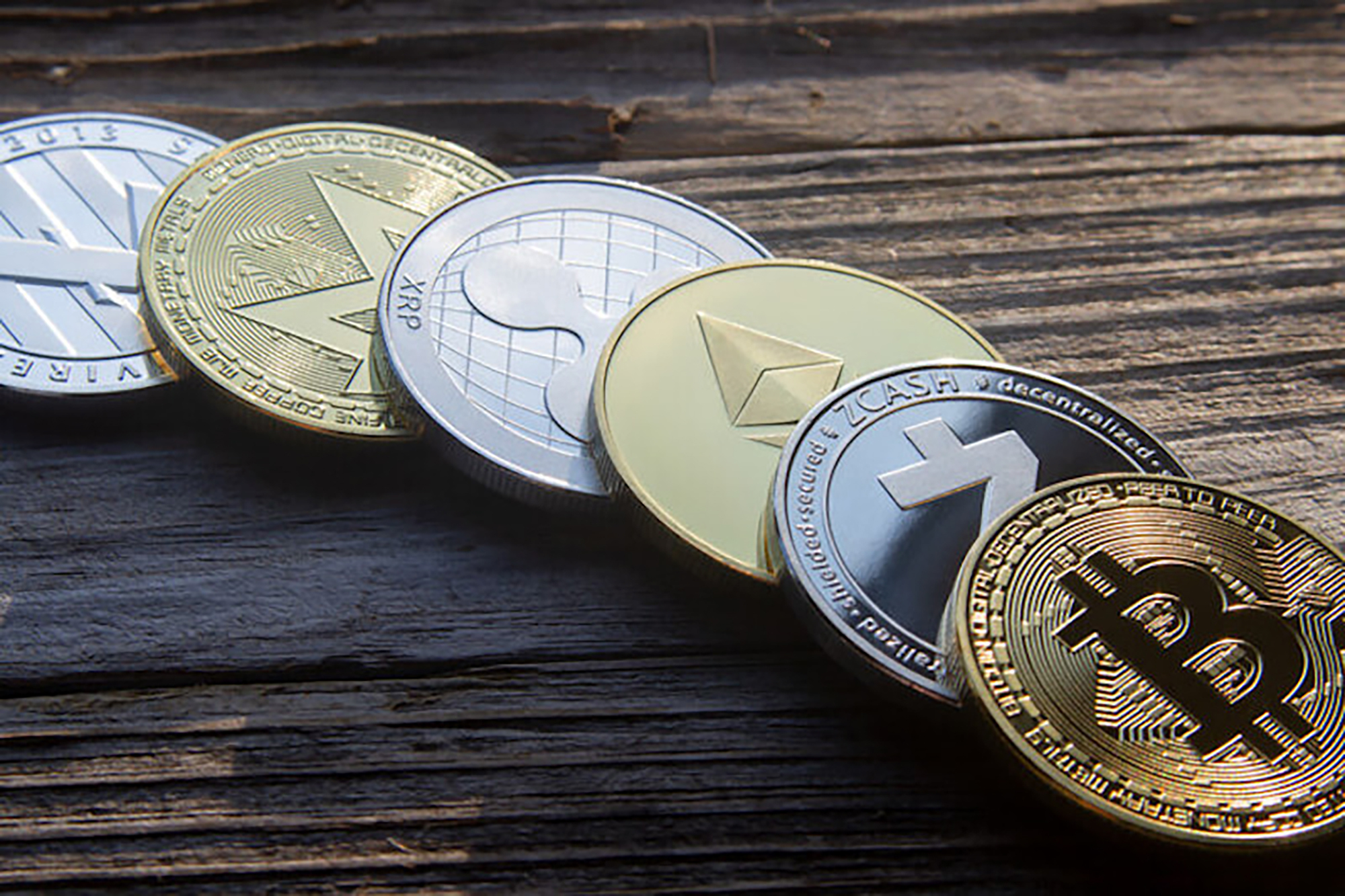
NewsNow aims to be the world’s most accurate and comprehensive crypto news aggregator, bringing you today’s latest headlines from the best alt coins and crypto news sites. Whether it’s Bitcoin, Dogecoin, Diem, Ethereum or Ripple, Monero, Litecoin, Dash or NEM, we’ve got it covered.
Prominent figures in the crypto space, Ark Invest CEO Cathie Wood and Galaxy Digital CEO Mike Novogratz, have expressed optimism regarding the approval of a spot bitcoin ETF by the SEC. With several applications pending, the crypto community eagerly awaits a positive decision, which could further legitimize and boost the adoption of cryptocurrencies
Cryptocurrencies are digital or virtual currencies that use cryptographic methods to secure transactions and control the creation of new units. Unlike traditional fiat currencies, which are issued and regulated by central authorities such as governments or central banks, cryptocurrencies operate on decentralized networks. These networks often employ blockchain technology, a public ledger system that records all transactions transparently and immutably.
In the ever-evolving world of cryptocurrencies, today brought a mix of intriguing developments that are sure to capture the attention of both crypto enthusiasts and traditional finance professionals. From Bitcoin’s resurgence on the back of weak Chinese economic data to the buzz around PayPal’s stablecoin, here’s a comprehensive roundup of the day’s most significant crypto news.
Bitcoin’s price saw a 3% uptick, climbing to just shy of $30,000 in response to a plunge in global long-dated government bond yields. This fall in yields was triggered by China’s far weaker than anticipated trade numbers for July. The U.S. 10-year Treasury yield tumbled below the 4% mark. These macroeconomic shifts have seemingly buoyed the crypto market, with other notable cryptocurrencies like Solana (SOL), Toncoin (TON), and Chainlink (LINK) registering gains of over 4% at the time of writing.
Cryptocurrency
Surprisingly, the anti-crypto stance of the Chinese government has done little to stop the industry. According to data by the University of Cambridge, China is now the second-biggest contributor to Bitcoin’s global hash rate, only behind the United States.
Related Links Are you ready to learn more? Visit our glossary and crypto learning center. Are you interested in the scope of crypto assets? Investigate our list of cryptocurrency categories. Are you interested in knowing which the hottest dex pairs are currently?
This will depend on the exact T&Cs of your agreement with your broker. Some brokers will hold cryptoassets in segregated accounts, so that if the firm goes bust, investors’ interests are protected. Cryptoassets are unregulated, so there is less protection available to them as an asset group, compared to stocks and bonds, for example.
The rewards paid to miners increase the supply of the cryptocurrency. By making sure that verifying transactions is a costly business, the integrity of the network can be preserved as long as benevolent nodes control a majority of computing power. The verification algorithm requires a lot of processing power, and thus electricity, in order to make verification costly enough to accurately validate the public blockchain. Not only do miners have to factor in the costs associated with expensive equipment necessary to stand a chance of solving a hash problem, they must further consider the significant amount of electrical power in search of the solution. Generally, the block rewards outweigh electricity and equipment costs, but this may not always be the case.
Bitcoin cryptocurrency
Mining is intensive, requiring expensive equipment and a lot of electricity to power it all. There’s no telling what nonce will work, so the goal is to plow through them as quickly as possible with as many machines working on the hash as possible to get the reward. This is why mining farms and mining pools were created.
Unlike traditional money, bitcoin operates without central authorities, relying on a decentralized network to verify and record transactions. It has a fixed supply of 21 million coins, making it resistant to inflation, and can be transferred globally without intermediaries, enabling low-cost payments with final settlement every 10 minutes.
The supply of bitcoins is limited to 21 million, a feature that is hard-coded into the bitcoin protocol. This scarcity is designed to ensure bitcoin is a deflationary asset, giving it some similarities to scarce commodities like gold. Unlike fiat currencies, which can be printed at will, bitcoin’s fixed supply ensures that its holders cannot be diluted by individuals or cabals issuing more monetary units.
Bitcoin was created in 2008 by an anonymous individual or group under the pseudonym Satoshi Nakamoto. Their true identity remains unknown, but the open-source protocol they developed is maintained and improved by a global community of software developers.
Technological innovations are making bitcoin more accessible, private and versatile. Layer 2 technologies, like the Lightning Network, enable faster and cheaper payments, enhancing bitcoin’s usefulness as a medium of exchange.