Levitra 20mg vardenafil
There are no data with the use of vardenafil in pregnant women to inform any drug-associated risks. In animal reproduction studies conducted in pregnant rats and rabbits, no adverse developmental outcomes were observed with oral administration of vardenafil during organogenesis at exposures for unbound vardenafil and its major metabolite at approximately 100 and 29 times, respectively, the maximum recommended human dose (MRHD) of 20 mg based on AUC (see Data) levitra pills.
Vardenafil was not carcinogenic in rats and mice when administered daily for 24 months. In these studies systemic drug exposures (AUCs) for unbound (free) vardenafil and its major metabolite were approximately 400-and 170-fold for male and female rats, respectively, and 21-and 37-fold for male and female mice, respectively, the exposures observed in human males given the Maximum Recommended Human Dose (MRHD) of 20 mg.
In male volunteers with CLcr = 50 to 80 mL/min, the pharmacokinetics of vardenafil were similar to those observed in a control group with CLcr >80 mL/min. In male volunteers with CLcr = 30 to 50 mL/min or CLcr<30 mL/min renal impairment groups, the AUC of vardenafil was 20 to 30% higher compared to that observed in a control group with CLcr>80 mL/min). Vardenafil pharmacokinetics have not been evaluated in patients requiring renal dialysis.
Because clinical trials are conducted under widely varying conditions, adverse reaction rates observed in the clinical trials of a drug cannot be directly compared to rates in the clinical trials of another drug and may not reflect the rates observed in practice.
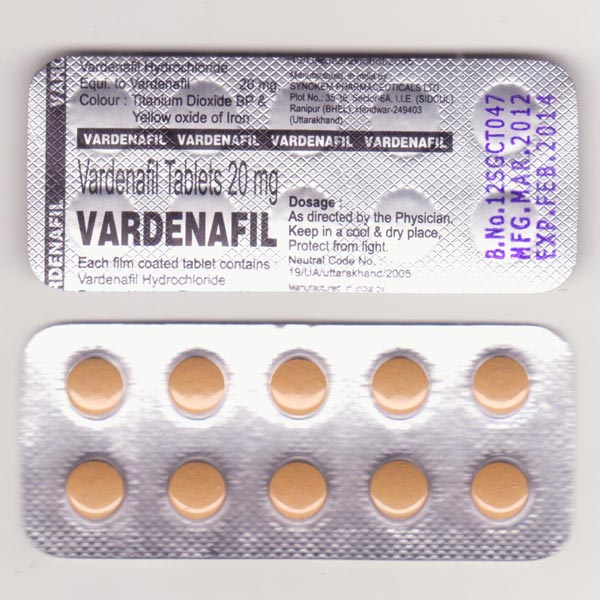
Vardenafil hydrochloride Tablets, 10 mg are light yellow to orange colored, round, biconvex, bevel edged, film-coated tablets, debossed with “10” on one side and “70” on other side and are supplied as:
Tadalafil vardenafil
Grapefruit juice can interact with ED medications, including Levitra, by affecting the way they are broken down in the body. This can lead to higher levels of the medication in the body, potentially increasing the risk of side effects. It’s generally recommended to avoid grapefruit juice while taking ED medications.
When choosing an online pharmacy, it’s also important to check their credentials and accreditation. Look for pharmacies that are accredited by organizations like the National Association of Boards of Pharmacy (NABP) or the PharmacyChecker program. These accreditations indicate that the pharmacy meets certain standards for safety, quality, and legitimacy.

Grapefruit juice can interact with ED medications, including Levitra, by affecting the way they are broken down in the body. This can lead to higher levels of the medication in the body, potentially increasing the risk of side effects. It’s generally recommended to avoid grapefruit juice while taking ED medications.
When choosing an online pharmacy, it’s also important to check their credentials and accreditation. Look for pharmacies that are accredited by organizations like the National Association of Boards of Pharmacy (NABP) or the PharmacyChecker program. These accreditations indicate that the pharmacy meets certain standards for safety, quality, and legitimacy.
The primary concern when buying ED medications online is the potential for counterfeit or unsafe products. Counterfeit medications may contain incorrect or harmful ingredients, which can have serious consequences for your health. They may also be ineffective, leading to frustration and wasted money.
While the active ingredients in chewable ED pills are the same as the active ingredients in traditional ED pills, it’s important to know that chewable ED pills are not FDA approved. The FDA warns that there may be risks associated with compounded drugs, including quality and no guarantee of ingredients.
Vardenafil com
The maximum dose of vardenafil for which human data are available is a single 120 mg dose administered to healthy male volunteers. The majority of these subjects experienced reversible back pain/myalgia and/or “abnormal vision.” Single doses up to 80 mg vardenafil and multiple doses up to 40 mg vardenafil administered once daily over 4 weeks were tolerated without producing serious adverse side effects.
There are several types of ED, each with varying degrees of severity. Some men experience occasional difficulties achieving or maintaining an erection, while others may face persistent challenges. My doctor explained that understanding the specific type of ED helps determine the underlying cause and guide appropriate treatment strategies.
Unneeded medications should be disposed of in special ways to ensure that pets, children, and other people cannot consume them. However, you should not flush this medication down the toilet. Instead, the best way to dispose of your medication is through a medicine take-back program. Talk to your pharmacist or contact your local garbage/recycling department to learn about take-back programs in your community. See the FDA’s Safe Disposal of Medicines website ( for more information if you do not have access to a take-back program.
The maximum dose of vardenafil for which human data are available is a single 120 mg dose administered to healthy male volunteers. The majority of these subjects experienced reversible back pain/myalgia and/or “abnormal vision.” Single doses up to 80 mg vardenafil and multiple doses up to 40 mg vardenafil administered once daily over 4 weeks were tolerated without producing serious adverse side effects.
There are several types of ED, each with varying degrees of severity. Some men experience occasional difficulties achieving or maintaining an erection, while others may face persistent challenges. My doctor explained that understanding the specific type of ED helps determine the underlying cause and guide appropriate treatment strategies.
Unneeded medications should be disposed of in special ways to ensure that pets, children, and other people cannot consume them. However, you should not flush this medication down the toilet. Instead, the best way to dispose of your medication is through a medicine take-back program. Talk to your pharmacist or contact your local garbage/recycling department to learn about take-back programs in your community. See the FDA’s Safe Disposal of Medicines website ( for more information if you do not have access to a take-back program.